Tracing the Evolution of API-Driven Fraud Detection in Niche E-Commerce Merchant Setups
Amir Wolf · Sep 14, 2026
Tracing the Evolution of API-Driven Fraud Detection in Niche E-Commerce Merchant Setups
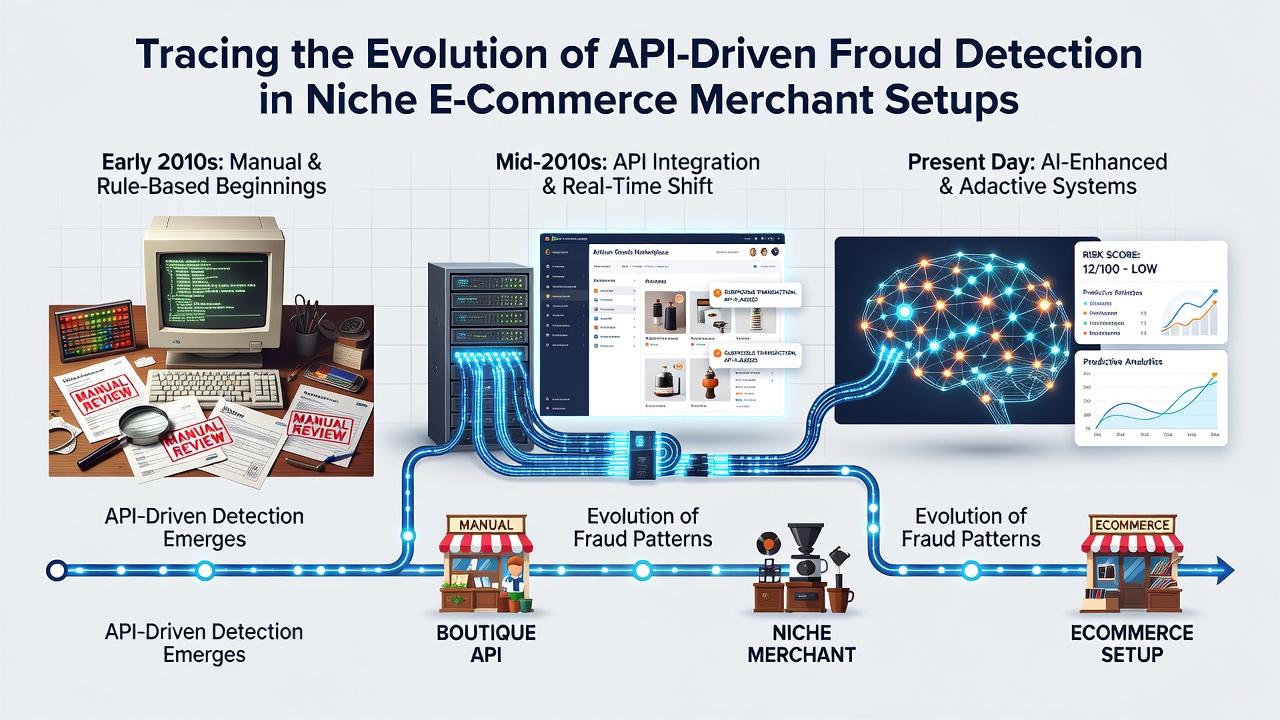
API-driven fraud detection has developed through several distinct phases since the early days of digital commerce, with niche e-commerce merchants adopting these tools to address unique transaction patterns in specialized product categories such as handmade goods, rare collectibles, and regional specialty foods. Researchers at institutions like the University of California have documented how initial systems relied on static rules that flagged obvious discrepancies in payment details, yet these approaches struggled against increasingly sophisticated attempts to exploit smaller merchant platforms that often lacked extensive in-house security teams.
Early Foundations in Rule-Based Systems
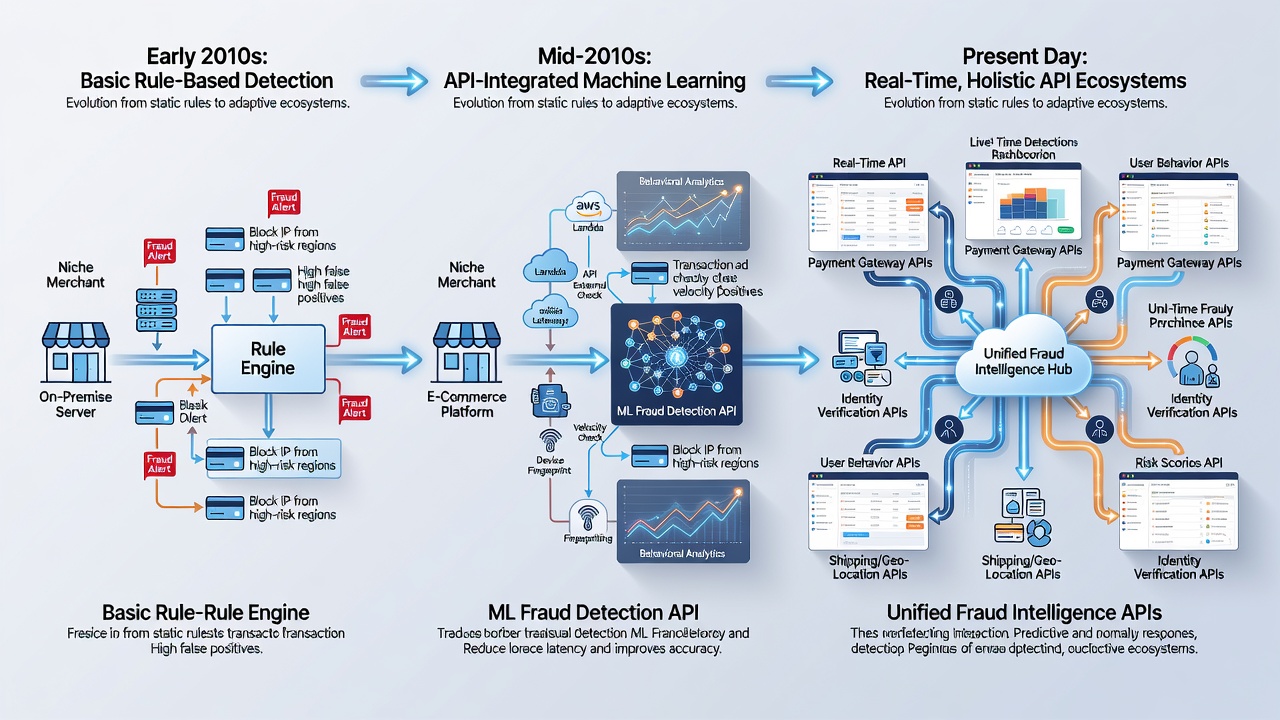
During the 2010s, many niche merchants integrated basic API connections to payment processors that performed simple checks for mismatched billing addresses or unusual purchase amounts, while larger platforms experimented with early machine learning models that required substantial data volumes to function effectively. Those who studied this period note that specialized sellers frequently turned to third-party services because building custom detection logic proved cost-prohibitive, and the available APIs offered modular endpoints that allowed quick verification of card details without requiring deep technical expertise on the merchant side.
Shift Toward Machine Learning Integrations
By the mid-2020s, API architectures began incorporating real-time behavioral analytics that examined browsing sequences, device fingerprints, and velocity patterns across multiple transactions, enabling niche setups to detect anomalies even when individual orders appeared legitimate on the surface. Data from the Australian Competition and Consumer Commission shows a measurable rise in API usage among small specialty retailers during this time, as these merchants sought ways to reduce chargeback rates without disrupting their streamlined checkout flows that catered to repeat customers in narrow market segments.
Adaptations for Specialized Merchant Environments
Niche e-commerce operations often handle lower transaction volumes compared to mainstream retailers, which created both challenges and opportunities for API-based solutions that scaled detection thresholds according to historical patterns unique to each product category. Observers note that merchants selling limited-edition items, for instance, benefited from APIs that flagged rapid successive purchases from new accounts more aggressively than systems designed for high-volume general merchandise sites, and this customization occurred through configurable parameters exposed in the API documentation rather than complete overhauls of backend code.
Integration points expanded to include inventory APIs that cross-referenced stock levels with order frequency, adding another layer of validation that helped identify coordinated attempts to drain limited supplies through fraudulent accounts. Those who've examined merchant case studies point to examples where specialty food vendors combined shipping API data with fraud scoring to verify that delivery addresses matched plausible geographic clusters for perishable goods, thereby catching discrepancies that generic address verification alone might miss.
Developments Approaching September 2026
As September 2026 approaches, updates to API frameworks from providers serving regional markets have introduced enhanced support for tokenized payment methods combined with contextual signals such as time-of-day purchasing habits and cross-referenced social proof indicators, allowing niche merchants to maintain competitive checkout speeds while strengthening defenses. Reports from the European Data Protection Board indicate that compliance requirements around data minimization have influenced how these APIs structure their queries, prompting developers to design lighter-weight calls that return fraud scores without transmitting unnecessary customer details.
Smaller merchants have also started leveraging aggregated industry datasets through secure API gateways, where anonymized transaction histories from similar niche categories help train detection models that would otherwise lack sufficient local data to identify emerging threat vectors. This collaborative approach has proven particularly useful for categories like vintage apparel or artisanal crafts, where fraud patterns differ markedly from those seen in electronics or apparel mass markets.
Conclusion
The progression of API-driven fraud detection continues to reflect the specific operational realities of niche e-commerce, with ongoing refinements in endpoint design and data-sharing protocols supporting merchants who operate outside high-volume retail norms. Evidence from multiple regulatory and academic sources demonstrates that these systems have moved from basic validation toward layered, context-aware analysis that aligns with the distinct transaction profiles found in specialized online marketplaces.